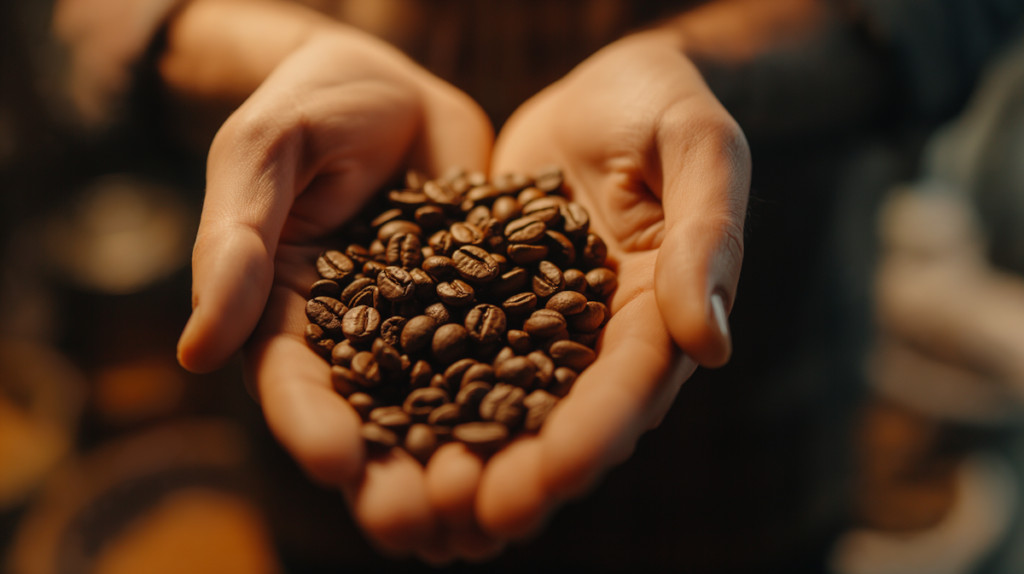

Choosing the perfect coffee beans is the single most important step in elevating your morning ritual. Whether you are a seasoned barista or a home brewing enthusiast, understanding the journey from seed to cup allows you to unlock flavors you never knew existed.
This comprehensive guide covers everything from the botanical types of coffee beans to the nuances of roast levels and brewing compatibility. We will explore the differences between whole beans and ground coffee, dive into the world of organic coffee, and help you navigate decaf coffee options that don’t sacrifice flavor. By the end of this pillar article, you will have the expertise to choose the right beans for your specific taste preferences and brewing methods.
What Are Coffee Beans?
Coffee beans are the processed and roasted seeds found inside the fruit, or “cherries,” of the Coffea plant. Despite their name, they are technically seeds, not legumes. Once harvested, these seeds are dried and roasted to transform their chemical properties into the aromatic, flavorful product we use for brewing.
Snippet Summary: Coffee beans are the seeds of the Coffea plant fruit. When extracted and roasted, they develop the complex oils and aromas essential for brewing. Understanding the origin and processing of these beans is key to mastering flavor profiles, acidity, and body in every cup of coffee you prepare.
Types of Coffee Beans
While there are over 100 species of coffee, the global market is dominated by four main varieties. Each offers a distinct chemical makeup and sensory experience.
Arabica (Coffea arabica)
Arabica represents approximately 60-70% of global production. Grown at high altitudes, these beans are prized for their superior quality and complexity.
- Flavor Profile: Generally sweet with notes of fruit, sugar, and berries. It features a higher acidity that translates into a “bright” or “crisp” taste.
- Pros: Complex flavors, lower caffeine (less bitterness), and a wide variety of cultivars.
- Cons: More expensive, harder to grow, and more susceptible to pests and climate changes.
- Best Brewing Methods: Pour over, Drip, and Chemex, where the subtle nuances can shine.
Robusta (Coffea canephora)
Robusta is the second most popular variety, known for its resilience and high yield. It grows at lower altitudes and is much hardier than Arabica.
- Flavor Profile: Strong, harsh, and earthy with a distinct peanutty aftertaste. It has significantly less acidity and more bitterness.
- Caffeine Content: Robusta contains nearly double the caffeine of Arabica, making it a favorite for those seeking a high-energy kick.
- Best Brewing Methods: Espresso blends (for better crema) and Instant Coffee.
Liberica & Excelsa
Liberica is a rare treat in the coffee world, primarily grown in the Philippines (known as Kapeng Barako).
- Rarity: It accounts for less than 2% of the world’s coffee. The beans are unusually large and asymmetric.
- Flavor Notes: Distinctly floral and fruity, but with a surprising “smoky” or woody finish.
- Who they’re for: Adventurous drinkers looking for a heavy body and a completely different aromatic experience than the “standard” coffee taste.
Roast Levels Explained (Light, Medium, Dark)
Roasting is the heat-driven process that turns green seeds into the brown coffee beans we recognize. The roast level determines whether you taste the origin of the bean or the process of the roast.
Light Roast
Light roasts are taken off the heat shortly after the “first crack.” The beans are light brown and have no oil on the surface.
- Flavor Profile: High acidity, floral, and citrusy notes. The unique characteristics of the soil and region are most prominent here.
- Aroma: Toasted grain, lemon, or jasmine.
- Best Brewing Method: Pour over or Aeropress.
- When comparing light vs dark roast, light roasts offer the most caffeine by volume but the least “toasty” flavor.
Medium Roast
Often called “The American Roast,” this is the most balanced level.
- Flavor Profile: Balanced acidity and body. You begin to taste the development of natural sugars (caramelization).
- Aroma: Sweet, nutty, and slightly chocolatey.
- Best Brewing Method: Drip coffee makers and French Press.
Dark Roast
Dark roasts are roasted until the “second crack” or beyond. The beans are dark brown, sometimes nearly black, and look shiny or oily.
- Flavor Profile: Bold, smoky, and bitter. The origin flavors are mostly replaced by the flavors of the roasting process.
- Aroma: Bittersweet chocolate, smoke, and charcoal.
- Best Brewing Method: Espresso and Moka Pot.
Whole Beans vs. Ground Coffee
The debate between convenience and quality often centers on whether to buy whole coffee beans or pre-ground coffee.
| Feature | Whole Beans | Ground Coffee |
| Freshness | High (stays fresh for weeks) | Low (stales within days) |
| Flavor Quality | Superior aromatic retention | Faded or muted flavors |
| Convenience | Requires a grinder | Ready to brew immediately |
| Versatility | Adjust grind for any method | Locked into one grind size |
Choosing between whole beans and ground coffee depends on your priority. Whole beans offer maximum freshness and flavor by preserving volatile oils until the moment of brewing. Ground coffee provides unmatched convenience but loses its aromatic complexity rapidly due to increased surface area exposure to oxygen.
Best Coffee Beans for Each Brewing Method
Not all beans are created equal when it comes to extraction. Matching your bean type to your equipment is the secret to a professional-grade cup.
Espresso
For a rich, concentrated shot, you need espresso beans that can handle high pressure. Darker roasts are traditional as they provide the oils necessary for a thick crema and stand up well to milk.
French Press
The best coffee beans for French press are typically medium to dark roasts. Because the French press uses a coarse grind and long immersion time, these roasts provide a full-bodied, chocolatey texture without becoming overly acidic.
Pour Over
To appreciate the delicate tea-like qualities of a V60 or Chemex, seek out the best medium roast coffee beans. These allow the bright, fruity notes of high-altitude Arabica to shine through the paper filter.
Cold Brew
Cold extraction takes time (12–24 hours). The best beans for cold brew are usually dark roasts. The cold water highlights the sweetness and chocolate notes while leaving behind the harsh bitterness often found in hot-brewed dark roasts.
Organic Coffee vs. Conventional Coffee
The rise of organic coffee beans has changed how consumers think about their morning brew. But is there a difference in the cup?
- Benefits: Organic coffee is grown without synthetic pesticides, herbicides, or fertilizers. This supports soil health and protects the biodiversity of the coffee-growing region.
- Certifications: Look for the USDA Organic or Fair Trade labels. These ensure that the production chain meets strict environmental and labor standards.
- Flavor Differences: While “organic” is a farming practice rather than a flavor profile, many enthusiasts find organic beans have a “cleaner” taste, free from the chemical aftertaste sometimes associated with mass-produced conventional crops.
Decaf Coffee (Process & Best Uses)
If you love the taste of coffee but want to skip the jitters, modern decaf coffee options have come a long way.
Decaffeination Methods
- Swiss Water Process: A chemical-free method that uses only water, temperature, and time to remove caffeine while preserving flavor.
- Solvent-Based (Ethyl Acetate): Often called the “Natural Process” when using sugars from sugarcane to bond with caffeine molecules.
- Carbon Dioxide (CO2) Method: Uses liquid CO2 to target caffeine specifically.
Flavor Expectations
The challenge is finding the best decaf coffee that tastes like regular. Look for “Swiss Water” processed beans, as they retain the most original flavor precursors. You can expect a slightly mellower acidity but the same rich body as caffeinated versions.
How to Store Coffee Beans
Freshness is the enemy of oxygen, light, heat, and moisture. Proper storage can extend the life of your beans from one week to one month.
- Containers: Use an airtight, opaque container. Avoid clear glass jars as light degrades the organic compounds in the beans.
- Temperature: Store in a cool, dark pantry. Avoid the “cabinet above the oven” where heat fluctuates.
- Freezing: This is controversial. You can freeze beans if they are in a vacuum-sealed, moisture-proof bag. However, taking them in and out of the freezer creates condensation, which ruins the beans instantly.
Snippet Summary: To maximize the lifespan of your coffee beans, store them in an airtight, opaque canister at room temperature. Keep them away from direct sunlight and moisture. While freezing is possible for long-term storage, it requires moisture-proof sealing to prevent condensation from destroying the delicate oils.
Grinding Coffee Beans (How-To)
The grind size is the “gatekeeper” of flavor. If your coffee is too sour, you’re under-extracting; if it’s too bitter, you’re over-extracting.
- Choose Your Tool: Invest in one of the best coffee grinders. A Burr Grinder is essential for uniformity, whereas a Blade Grinder produces inconsistent “dust and boulders.”
- Match the Size:
- Coarse: Looks like sea salt (French Press).
- Medium: Looks like sand (Drip/Pour Over).
- Fine: Looks like powdered sugar (Espresso).
- Grind Fresh: Only grind the amount you need for that specific brew. Once ground, the surface area increases exponentially, and the coffee begins to stale within minutes.
Frequently Asked Questions (FAQ)
What are the best coffee beans for beginners?
For beginners, a medium roast Arabica bean from Central or South America (like Colombia or Brazil) is ideal. These beans are naturally sweet, low in overwhelming acidity, and very forgiving regardless of the brewing method you use.
What roast level is best for espresso?
Medium-dark to dark roasts are traditionally best for espresso. These roasts are more soluble, making it easier to extract a rich flavor in the short 25-30 second window of an espresso pull. They also produce the classic crema.
Are organic coffee beans worth it?
Yes, if you prioritize environmental sustainability and want to avoid synthetic chemical residues. While they may be slightly more expensive, they support healthier ecosystems and often come from farms that prioritize quality over quantity.
How long do coffee beans stay fresh?
Unopened bags usually stay fresh for 3–6 months. However, once the seal is broken, coffee beans are at their peak for 7–21 days. After this point, the aromatic oils oxidize, and the flavor becomes flat or “woody.”
Is ground coffee worse than whole beans?
“Worse” is subjective, but ground coffee is objectively less fresh. Because grinding increases the surface area exposed to oxygen, ground coffee loses its nuance much faster than whole beans. For the best flavor, whole beans are always superior.
How can I tell if my beans are oily?
Oily beans are a hallmark of dark roasts. As the beans are heated longer, the internal CO2 pressure pushes the natural oils to the surface. If you see a shiny coating, it is likely a dark roast or an older bean where the oils have seeped out over time.
Can I use any coffee beans for cold brew?Can I use any coffee beans for cold brew?
Technically, yes, but dark roasts are preferred. The cold brewing process mutes acidity, so the bright notes of a light roast might get lost, whereas the chocolatey, nutty notes of a dark roast are enhanced.
Does caffeine content change with roasting?
Actually, the caffeine content remains relatively stable during roasting. However, dark roast beans are less dense and larger. If you measure by scoops (volume), light roast has more caffeine. If you measure by weight (grams), they are nearly identical.
Ready to Brew?
Understanding the complexities of coffee beans is the first step toward a café-quality experience at home. From choosing between Arabica and Robusta to mastering the grind size for your French Press, you now have the tools to customize every cup.