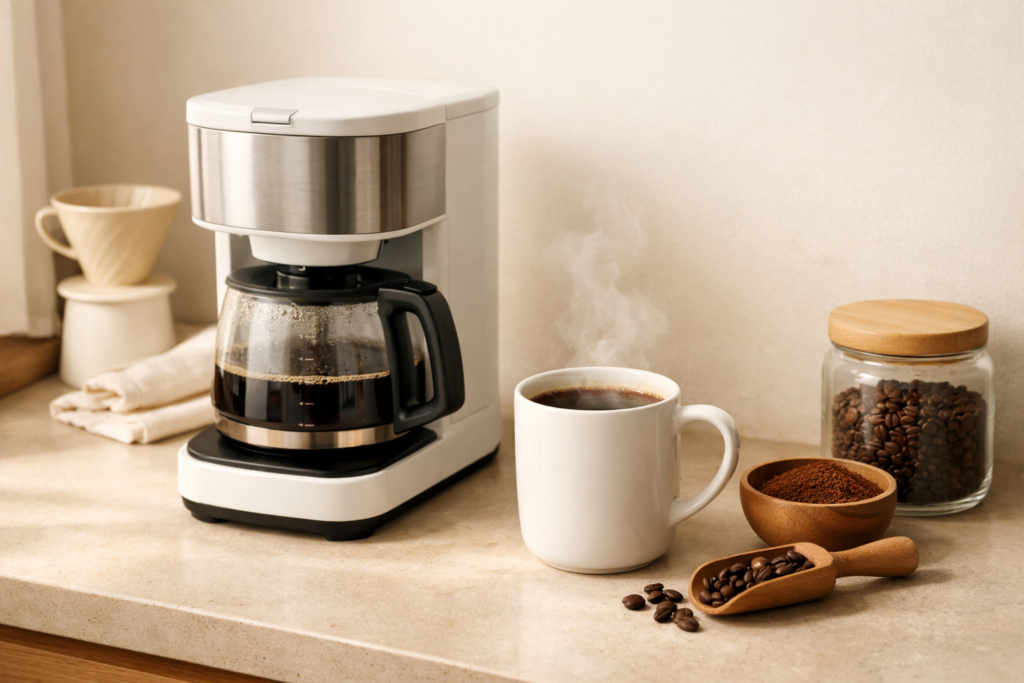

Stepping into the world of home brewing can feel like entering a laboratory. With so many gadgets, buttons, and techniques available, it is easy to feel overwhelmed. Finding the best coffee makers for beginners isn’t just about finding the cheapest machine; it’s about finding a reliable partner that delivers a great cup of coffee without a steep learning curve.
Introduction
Starting your home coffee journey is an exciting transition from being a passive consumer to a home barista. However, the market is flooded with complex equipment that requires precise measurements and professional techniques. For most people, the goal is simple: a delicious, hot cup of coffee with minimal fuss.
Beginners need simple coffee machines that prioritize consistency and ease of use. You don’t need a thousand-dollar setup to enjoy a premium morning ritual. By choosing the best starter coffee maker for your specific lifestyle, you can save money, reduce stress, and arguably brew a better cup than your local drive-thru. In this guide, we will explore the best coffee makers for beginners in 2025, focusing on functionality and reliability to help you master beginner-friendly brewing.
What Makes a Coffee Maker Beginner-Friendly?
The best coffee makers for beginners are defined by their “set it and forget it” capability. A beginner-friendly machine should feature an intuitive interface, require minimal assembly, and offer a straightforward cleaning process. It must produce consistent flavor results every time, regardless of the user’s technical skill level or coffee knowledge.
Key factors include:
- Ease of Use: One-touch buttons or simple dials.
- Minimal Setup: Ready to brew straight out of the box.
- Simple Cleaning: Removable parts that are dishwasher safe or easy to rinse.
- Consistent Results: Automated temperature and timing controls.
- Low Learning Curve: No need for advanced physics or specialized math.
Types of Beginner-Friendly Coffee Makers
Understanding the different ways to brew is the first step in selecting easy coffee makers. Each method offers a different flavor profile and requires a different level of interaction.
Drip Coffee Makers
The classic automatic drip machine is the quintessential best starter coffee maker. It works by heating water from a reservoir and dripping it over a bed of ground coffee in a filter. The finished brew then collects in a carafe below.
Why it’s good for beginners: It is the most familiar method for most people. You simply add a filter, coffee, and water, then press a button. It is ideal for brewing large batches at once.
- Pros: Very affordable, makes multiple cups, programmable timers.
- Cons: Takes up counter space, can result in “burnt” flavors if left on a warming plate too long.
- Learn more: Check out our drip coffee makers guide.
Single-Serve Coffee Makers
These are arguably the most simple coffee machines on the market. They use pre-packaged pods or capsules to brew one cup at a time. The machine pierces the pod and forces hot water through it at the touch of a button.
Why it’s good for beginners: There is zero measuring involved. You get the exact same flavor every single morning with no cleanup other than tossing the used pod.
- Pros: Extremely fast, zero mess, huge variety of flavors.
- Cons: Higher cost per cup, environmental impact of pods.
- Learn more: See our single-serve coffee makers section.
Pod-Based Espresso Machines
If you love lattes and cappuccinos but aren’t ready to learn the art of tamping and pressure profiling, pod-based espresso machines are perfect for beginner-friendly brewing. They function similarly to single-serve drip machines but use higher pressure to create a concentrated espresso-style shot.
Why it’s good for beginners: You can enjoy “fancy” coffee drinks without needing a barista certification. Most include a simple milk frother attachment that does the work for you.
- Pros: Compact, creates crema (the golden foam), very consistent.
- Cons: Pods can be expensive, limited to specific brands of capsules.
French Press (Beginner-Friendly Version)
The French Press is a manual method, but it is widely considered the easiest “craft” method for a beginner. You steep coarse coffee grounds in hot water for four minutes and then press a mesh filter down to separate the grounds.
Why it’s good for beginners: It requires no electricity and gives you full control over the flavor. It is a great way to learn how brew time affects taste without needing complex gear.
- Pros: Rich and bold flavor, no paper filters needed, very affordable.
- Cons: Requires a separate kettle to boil water, can be messy to clean the grounds.
Automatic Espresso Machines
For those who want the luxury of a café at home, automatic (or “super-automatic”) espresso machines handle everything from grinding the beans to frothing the milk.
Why it’s good for beginners: It offers a “bean-to-cup” experience. You add whole beans to a hopper, and the machine does the rest. It provides the highest quality coffee with the lowest manual effort.
- Pros: Freshest possible coffee, highly customizable, very impressive results.
- Cons: Very expensive, requires more frequent deep-cleaning and maintenance.
- Learn more: Browse our espresso machines guide.
Best Categories for Beginners (Non-Affiliate)
When searching for the best coffee makers for beginners, it helps to categorize them by your specific lifestyle needs rather than just looking at brand names.
Easiest Coffee Maker Overall
The Single-Serve Pod System wins this category. With no measurements required and a cleanup process that takes three seconds, it is the ultimate entry point for anyone who just wants coffee without the homework.
Best for Small Kitchens
Manual Pour-Over or Slim Pod Machines are the way to go. If you have limited counter space, a manual dripper can be tucked into a drawer, while slim-line electric models are often less than five inches wide.
Best for Busy Mornings
Programmable Drip Coffee Makers allow you to prep the machine the night before. You can wake up to the smell of fresh coffee already waiting in the carafe, making it the most efficient choice for commuters and parents.
Best for Espresso-Curious Beginners
Moka Pots or Entry-Level Pod Espresso Machines are great. They provide that concentrated, “strong” coffee taste that holds up well in milk-based drinks like lattes without requiring you to manage a high-pressure commercial pump.
Best Budget Option
The French Press provides the best “bang for your buck.” For a very small investment, you get a durable piece of equipment that produces a much more flavorful cup than a cheap, low-quality plastic drip machine.
How to Choose the Right Coffee Maker as a Beginner
Selecting the best coffee makers for beginners depends on your personal habits. Before buying, ask yourself these six questions:
- Brew Method Preference: Do you prefer a large mug of black coffee (Drip/French Press) or a small, intense shot (Espresso)?
- Cleaning Difficulty: Are you willing to hand-wash components, or do you want everything to be dishwasher-safe? Some machines have many moving parts that require descaling.
- Counter Space: Measure your cabinets. Some machines are tall and won’t fit under standard kitchen cabinets when the lid is open.
- Speed: How many minutes do you have? A French Press takes 5-7 minutes; a pod machine takes 60 seconds.
- Flavor Expectations: Are you looking for convenience or the “perfect” cup? Manual methods usually taste better but require more effort.
- Maintenance: Every machine needs care. Check if the model you like requires proprietary water filters or expensive cleaning tablets.
To complement your new machine, don’t forget to check our coffee accessories guide for items like grinders and scales.
Beginner Mistakes to Avoid
Even with the best coffee makers for beginners, you can still end up with a bad cup if you fall into common traps. Avoiding these errors will immediately elevate your brewing game.
- Using the Wrong Grind Size: Using fine espresso powder in a French Press will result in a muddy, bitter mess. Always match your grind to your machine.
- Ignoring Cleaning: Old coffee oils turn rancid. If you don’t rinse your machine, your “fresh” coffee will always taste slightly sour or metallic.
- Using Low-Quality Beans: A $500 machine cannot make “bad” beans taste “good.” Start with fresh, whole beans whenever possible.
- Overfilling Water: Most easy coffee makers will use all the water in the reservoir. If you fill it to the max but only add two scoops of coffee, you’ll get brown water.
- Not Reading Instructions: Every machine has a specific “sweet spot” for water temperature or coffee-to-water ratios.
Tips for Better Coffee as a Beginner
You don’t need to be a professional to enjoy professional-quality coffee. These five simple tips work for almost any beginner-friendly brewing setup:
- Use Fresh Beans: Coffee starts losing flavor minutes after it is ground. Buying a simple burr grinder is the single best upgrade you can make.
- Filtered Water: Coffee is 98% water. If your tap water tastes like chlorine, your coffee will too. Use a simple water pitcher filter.
- Correct Ratios: A general rule is 2 tablespoons of coffee for every 6 ounces of water. Adjust from there based on your taste.
- Preheating: Rinse your mug or your French Press with hot water before brewing. This keeps your coffee hot for much longer.
- Simple Upgrades: Once you’re comfortable, try switching from paper filters to permanent gold-tone filters to see how the flavor changes.
Frequently Asked Questions (FAQ)
What is the easiest coffee maker for beginners?
The single-serve pod machine is the easiest. It requires no measuring of grounds or water ratios and has a one-button operation, making it the most accessible entry point for those new to home brewing.
Should beginners start with drip or single-serve?
Drip coffee makers are better if you drink multiple cups or live in a household with other coffee drinkers. Single-serve is better for individuals who value speed and variety over volume and cost-effectiveness.
Are espresso machines good for beginners?
Yes, provided you choose an automatic or pod-based model. Manual espresso machines have a very steep learning curve and are generally not recommended as a “first” machine unless you are prepared for a lot of trial and error.
What grind size should beginners use?
It depends on the machine. Use “Medium” for drip coffee, “Coarse” for French Press, and “Fine” for espresso. Most pre-ground coffee in grocery stores is “Medium,” which works best for standard drip machines.
How much should a beginner spend on a coffee maker?
A beginner can get a great start for under $50 with a French Press or a basic drip machine. If you want convenience and automation, expect to spend between $100 and $200 for a quality machine that will last.
What is the simplest way to make good coffee at home?
The simplest way is using fresh-ground beans in a clean drip coffee maker with filtered water. This removes the variables that cause bad flavors while keeping the process automated and easy to manage.
Conclusion
Finding the best coffee makers for beginners is about balancing your love for coffee with your available time and patience. Whether you choose the ultimate convenience of a pod machine or the ritualistic simplicity of a French Press, the goal is to enjoy the process as much as the drink itself.
By focusing on easy coffee makers and avoiding common pitfalls like poor grind size or neglected cleaning, you can transform your mornings. Remember, the best starter coffee maker is the one that you actually enjoy using every day.