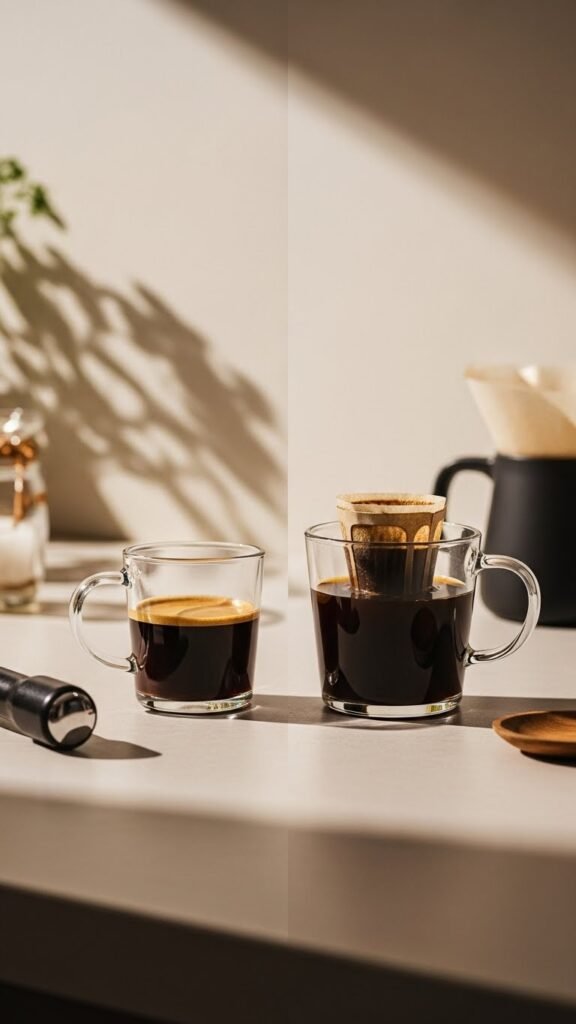

When comparing Espresso vs Drip Coffee, the differences go far beyond strength or caffeine. Understanding how espresso and drip coffee differ in brewing, flavor, and daily use helps you choose the right option for your lifestyle.
This Espresso vs Drip Coffee guide is designed to help beginners and coffee enthusiasts clearly understand the real differences between these two popular brewing methods.
Espresso vs Drip Coffee (Quick Summary)
The main difference between espresso and drip lies in the extraction method. Espresso uses high pressure to force hot water through finely-ground beans, creating a concentrated shot. Drip coffee relies on gravity, slowly filtering water through medium grounds for a lighter, higher-volume cup with a cleaner finish.
What Is Espresso?
In the Espresso vs Drip Coffee comparison, espresso is often misunderstood as a specific bean or roast, but it is actually a brewing method.. It is defined by the use of significant pressure—typically 9 bars—to push water through a tightly packed “puck” of coffee grounds.
Pressure-Based Extraction
The hallmark of espresso is the use of mechanical pressure. This force emulsifies oils and sugars that gravity alone cannot reach, resulting in the “crema”—the golden-brown foam that sits atop a perfect shot.
Fine Grind and Short Brew Time
Because the water is under such high pressure, the coffee must be ground extremely fine (like powdered sugar) to provide the necessary resistance. This allows for a full extraction in just 25–30 seconds.
Concentrated Flavor Profile
The result is a highly concentrated, 1-to-2-ounce beverage. If you want to master this craft at home, consulting an espresso machines guide is the first step toward achieving café-quality results.
What Is Drip Coffee?
In the Espresso vs Drip Coffee comparison, drip coffee is a popular brewing method where hot water slowly drips through ground coffee, extracting flavors as it passes through a filter and into a carafe or cup below. This method is commonly used in automatic coffee makers, pour-over brewers, and manual drip systems. Because the extraction happens gradually and without pressure, drip coffee tends to have a clean, smooth, and well-balanced flavor profile. It’s especially valued for its simplicity, consistency, and ability to brew multiple cups at once, making it a go-to choice for everyday coffee drinkers.
Gravity-Based Brewing
Hot water is poured over a bed of coffee grounds, passing through a paper or metal filter before dripping into a carafe. This process is passive, relying on the weight of the water to move through the coffee bed.
Medium Grind Requirements
Drip brewing requires a medium-coarse grind, similar to the texture of coarse sand. If the grind is too fine, the water won’t pass through; if it’s too coarse, the water runs through too fast, leaving the coffee weak.
Clean and Smooth Flavor
This method is celebrated for its clarity. Because paper filters remove most of the oils and sediment, the resulting cup is light and “clean.” To get the best results, choosing the right brewer is essential; you can find more details in a drip coffee makers guide.
Key Differences (Side-by-Side Comparison)
In the Espresso vs Drip Coffee comparison, the main differences come down to brewing method, concentration, flavor, and serving size. Espresso is brewed by forcing hot water through finely ground coffee under high pressure, resulting in a small, concentrated shot with a bold taste and thick body.
Technical Breakdown
- Brew Method: Pressure-based (9 bars) vs. Gravity-based.
- Grind Size: Fine (Espresso) vs. Medium (Drip).
- Brew Time: 30 seconds vs. 5 minutes.
- Flavor: Intense and syrupy vs. Balanced and light.
Equipment and Learning Curve
Espresso requires specialized machinery and a steeper learning curve (often called “dialing in”). Drip coffee is much more accessible for the average home user and requires less precision to produce a drinkable cup.
Flavor Comparison
When it comes to flavor, the Espresso vs Drip Coffee debate reveals two very different coffee experiences. Espresso delivers a bold, rich, and concentrated taste, with a thicker mouthfeel and intense aromas. You’ll often notice deep notes like chocolate, caramel, or toasted nuts, along with a lingering finish. Drip coffee, on the other hand, tends to be lighter and more nuanced, allowing subtle flavor notes—such as fruit, florals, or acidity—to shine through. While espresso emphasizes intensity and body, drip coffee highlights clarity and balance, making each method appealing in its own way.
Espresso: Bold, Intense, and Creamy
Espresso is an explosion of flavor. Because of the pressure, more oils and solids are emulsified into the liquid. This gives it a heavy body and a lingering aftertaste of toasted nuts or dark chocolate.
Drip: Smooth, Balanced, and Lighter
Drip coffee offers a more mellow experience. It allows the subtle acidity and sweetness of the bean to shine through. While espresso can sometimes mask the delicate qualities of a light-roast bean, drip brewing highlights them beautifully.
How Roast Level Affects Each
Dark roasts are traditional for espresso as they provide the classic “punch.” Light roasts are often preferred for drip to showcase origin notes. For a deeper look, check out an espresso beans guide to see how roasts perform under pressure.
Espresso vs drip coffee caffeine
In the Espresso vs Drip Coffee discussion, caffeine levels are often misunderstood because they depend on both concentration and serving size. Espresso is highly concentrated, meaning it contains significantly more caffeine per ounce than drip coffee. However, espresso is typically served in small amounts—usually 1 to 2 ounces per shot—so the total caffeine per serving is lower than many people expect. A standard 10–12 oz cup of drip coffee generally delivers more total caffeine than a single espresso shot, even though it tastes milder. A double espresso may come close, but drip coffee usually provides the bigger caffeine boost overall.
Caffeine Per Ounce
In terms of concentration, espresso is the clear winner. A single shot of espresso (1 oz) contains roughly 63mg of caffeine, whereas 1 oz of drip coffee contains only about 12–15mg.
Caffeine Per Cup
However, we don’t drink coffee in equal volumes. A standard 12oz mug of brewed coffee provides 140–180mg of caffeine. A standard double espresso (2oz) only provides about 126mg. Therefore, your morning mug of drip actually gives you more total caffeine.
Cost & Equipment Differences
When comparing Espresso vs Drip Coffee, espresso typically requires more expensive equipment, including a dedicated machine and grinder. Drip coffee setups are generally more affordable and accessible, ranging from basic automatic brewers to simple pour-over tools, making drip coffee easier to start with and maintain.
Machine Cost and Maintenance
A quality espresso machine is a significant investment and requires daily cleaning of the portafilter and steam wand. Drip machines are affordable and usually only need an occasional descale.
Accessories Needed
For espresso, you need a tamper, a knock box, and a high-end grinder. Drip coffee is simpler but benefits from a good scale. To optimize either setup, our coffee accessories guide covers the essentials.
Which One Is Better for You? (Beginner-Friendly Breakdown)
If you’re deciding between Espresso vs Drip Coffee, your daily habits matter most. If you prefer simplicity and convenience, drip coffee is usually the better choice. Espresso suits those who enjoy hands-on brewing, strong flavors, and experimenting with technique. Your lifestyle, budget, and taste preferences ultimately determine the best option.
Best for Beginners and Budget
If you want a low-cost, easy-to-use system, drip coffee is the winner. It is forgiving and produces large batches for the whole family.
Best for Strong Flavor and Milk Drinks
If you enjoy lattes or want a “kick” of flavor, espresso is the way to go. Its concentrated nature allows the coffee to cut through milk effortlessly.
Common Mistakes When Choosing Between Espresso and Drip
A common mistake is assuming espresso has more caffeine overall or that drip coffee lacks flavor. Another is overlooking cost, learning curve, and daily habits, which often matter more than strength or brewing style alone.
Confusing Strength with Caffeine
People often assume espresso will keep them awake longer, but as we’ve seen, a large drip coffee often contains more total caffeine.
Ignoring Maintenance and Daily Routine
If you only have two minutes in the morning, the ritual of pulling an espresso shot might be too much work. Consider your actual schedule before investing in equipment.
Frequently Asked Questions (FAQ)
What is the main difference in Espresso vs Drip Coffee?
The main difference in Espresso vs Drip Coffee lies in brewing pressure, extraction time, flavor intensity, and serving size.
Is espresso stronger than drip coffee?
In terms of concentration and flavor intensity, yes. However, a full cup of drip coffee usually has more total caffeine than a single shot of espresso.
Which has more caffeine: espresso or drip?
Ounce-for-ounce, espresso is higher. But per serving, a 12oz drip coffee has more caffeine than a 2oz double espresso.
Is espresso healthier than drip coffee?
Drip coffee brewed with a paper filter may be slightly better for cholesterol levels, as paper filters trap certain coffee oils (cafestol) that espresso allows through.
What grind size do you need for each?
Espresso needs a fine grind (table salt texture). Drip coffee requires a medium grind (coarse sand texture).
Which is easier for beginners?
Drip coffee is much easier. It requires less precision and cheaper equipment to get started.
Can you make espresso with a drip machine?
No. Drip machines cannot generate the 9 bars of pressure required to create true espresso and crema.
Conclusion
The choice between Espresso vs Drip Coffee comes down to whether you prefer intensity or volume. Espresso offers a luxurious, concentrated experience, while drip coffee provides a balanced, clear cup perfect for all-day sipping. Understanding Espresso vs Drip Coffee ensures you get the most out of every bean.