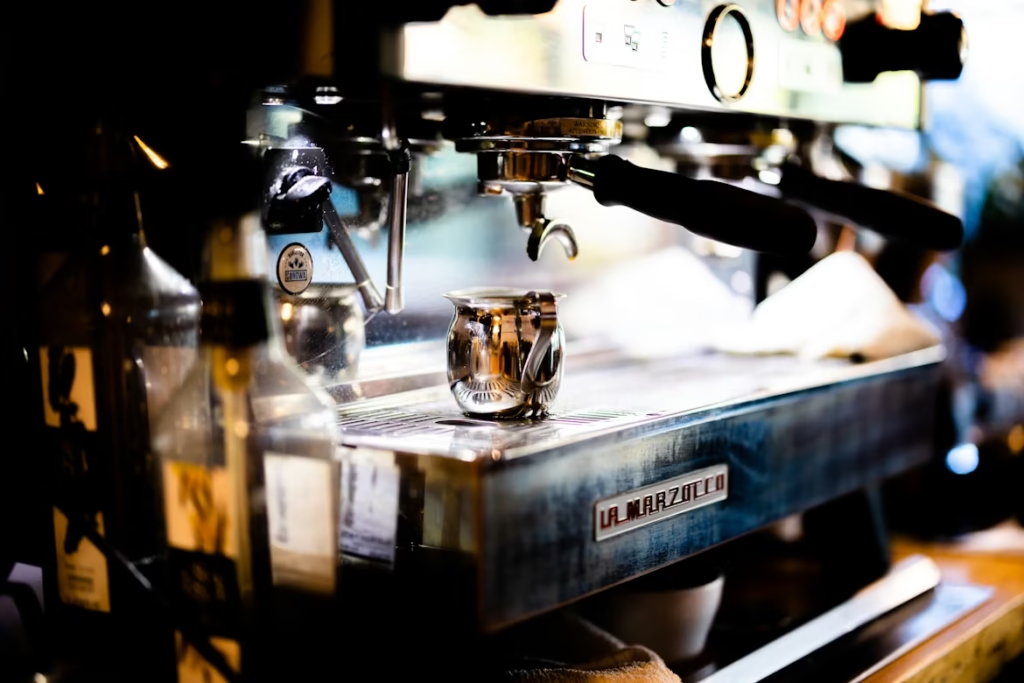

Welcome to the ultimate resource for mastering the art of home brewing. Whether you are a budding barista or a seasoned coffee enthusiast, understanding the nuances of espresso machines is the first step toward achieving that perfect, syrupy shot of liquid gold. In this comprehensive guide, we will break down how these machines operate, the various types available on the market, and the essential features you need to consider before making an investment.
What Are Espresso Machines?
Espresso machines are specialized coffee-making devices designed to force pressurized water near boiling point through a puck of finely-ground coffee and a filter. This high-pressure process results in a concentrated, flavorful coffee known as espresso, characterized by its thick body and a signature layer of foam called crema.
How Espresso Machines Work
Understanding how espresso machines work involves grasping the physics of heat and pressure. Unlike a standard drip coffee maker that relies on gravity, espresso requires mechanical force to extract flavor rapidly.
The Extraction Process
The journey from bean to cup follows a precise scientific path:
- Water Heating: The machine draws water from a reservoir or plumbed line into a boiler or thermoblock. For the best results, the water must reach an ideal temperature of 195–205°F.
- Pressure Generation: An internal pump (usually vibratory or rotary) creates the necessary force. To achieve authentic espresso extraction, the machine must reach an espresso pressure of at least 9 bars.
- Extraction: The pressurized water is forced through the “group head” and into the portafilter containing the compressed coffee grounds.
- Crema Formation: As the oils from the coffee emulsify with the carbon dioxide and high-pressure water, a golden-brown layer of crema forms on top of the shot.
Step-by-Step Breakdown
- Heating: The boiler stabilizes the water temperature.
- Pressurizing: The pump engages to move the water.
- Saturation: The “pre-infusion” stage gently wets the grounds.
- Flow: The 9-bar pressure forces the water through the resistance of the coffee puck.
- Completion: The shot is cut once the desired volume (usually 1–2 ounces) is reached.
Types of Espresso Machines
Selecting the right equipment depends on how much control you want over the process. There are several espresso machine types, ranging from hands-on traditional levers to one-touch digital systems.
Manual Espresso Machines
Manual espresso machines (often called lever machines) are the purist’s choice. They require the user to physically pump a lever to generate the pressure needed for extraction.
- How it works: You pull a lever to cock a spring or manually push a piston to force water through the coffee.
- Pros: Complete control over the pressure profile; silent operation; beautiful vintage aesthetics.
- Cons: Steep learning curve; physically demanding; inconsistent results for beginners.
- Best for: Experienced baristas who view coffee making as a ritual or an art form.
Semi-Automatic Espresso Machines
Semi-automatic espresso machines are the most popular choice for home enthusiasts. They use an electric pump to manage the pressure, but the user decides when to start and stop the shot.
- How it works: You grind the coffee, tamp it into the portafilter, and engage a switch to start the pump.
- Pros: Balance of convenience and control; allows for customization of shot timing.
- Cons: Requires a separate grinder; requires practice to master tamping and grind size.
- Best for: Hobbyists who want “real” espresso but don’t want to pump a lever manually.
Automatic Espresso Machines
Automatic espresso machines are very similar to semi-automatics, but they include a flow meter that automatically stops the water flow after a programmed volume.
- How it works: You press a button for a single or double shot, and the machine cuts the flow for you.
- Pros: Highly consistent; reduces the risk of over-extraction.
- Cons: Less control over the final volume unless reprogrammed; more internal electronics.
- Best for: Busy households who want consistent quality without hovering over the machine.
Super-Automatic Espresso Machines
These are the “bean-to-cup” wonders. They handle every step of the process with the push of a single button.
- How it works: The machine grinds the beans, tamps them, extracts the espresso, and even froths the milk automatically.
- Pros: Ultimate convenience; no barista skills required.
- Cons: Expensive; difficult to repair; limited control over the fine nuances of flavor.
- Best for: Offices or coffee lovers who prioritize speed and ease of use.
Capsule Espresso Machines
Often referred to as Nespresso-style machines, these use pre-packaged pods.
- How it works: You insert a plastic or aluminum capsule, and the machine pierces it to brew.
- Pros: Zero mess; extremely fast; compact.
- Cons: High cost per cup; environmental impact of pods; limited coffee variety.
- Best for: Small kitchens or people who only drink coffee occasionally.
Key Features to Look For
When shopping for espresso machines, the spec sheet can be overwhelming. Focus on these critical components to ensure you get a high-quality brewer.
- Pressure: Look for a machine capable of at least 9 bars. While some advertise “15 bars,” this is usually the pump’s peak capacity, not the extraction pressure.
- Boiler Type: Single boilers are cheaper but require a wait time between brewing and steaming. Double boilers allow you to do both simultaneously.
- Temperature Stability: PID (Proportional-Integral-Derivative) controllers are digital thermostats that keep the water at a precise temperature.
- Steam Wand: A powerful steam wand is essential for lattes and cappuccinos. Look for “commercial-style” wands for better microfoam.
- Build Quality: Stainless steel internal components last longer than plastic ones.
- Ease of Cleaning: Removable drip trays and accessible brew groups make maintenance much simpler.
- Grinder Integration: Some machines come with built-in grinders. If yours doesn’t, check out our coffee accessories guide to find a standalone burr grinder.
Best Espresso Machine Categories
Rather than looking at specific brands, it is helpful to categorize machines by your specific lifestyle needs:
- Best for Beginners: Machines with pressurized filter baskets. These are more “forgiving” of inconsistent grind sizes.
- Best for Small Kitchens: Slim-profile thermoblock machines that heat up in under 30 seconds.
- Best for Latte Lovers: Dual-boiler machines that provide high-capacity steam pressure for back-to-back milk drinks.
- Best Budget Option: If you are looking for quality on a tight budget, check out our guide on the best espresso machine under 300.
- Best for Advanced Home Baristas: Prosumer machines with E61 group heads and flow control paddles.
Choosing the Right Espresso Beans
Your machine is only as good as the coffee you put into it. For a successful espresso extraction, you need the right beans.
- Roast Level: Medium to dark roasts are traditional for espresso because they are more soluble and produce better crema.
- Freshness: Use beans roasted within the last 2 to 4 weeks. Old beans lose the gases required to create crema.
- Grind Size: Espresso requires a very fine, salt-like grind. If the grind is too coarse, the water will rush through (under-extraction). If it’s too fine, the machine will choke (over-extraction).
For more details on sourcing the perfect roast, visit our espresso beans guide.
Common Espresso Machine Mistakes
Many new owners struggle with poor-tasting shots. Common errors include using pre-ground coffee, which lacks the freshness needed for crema. Additionally, failing to “prime” the machine or using unfiltered water can lead to inconsistent temperatures and eventual mechanical failure due to scale buildup.
- Wrong Grind Size: Causes sour (coarse) or bitter (fine) shots.
- Incorrect Tamping: Uneven pressure leads to “channeling,” where water bypasses the coffee.
- Low Pressure: Often caused by stale beans or an improperly filled portafilter.
- Over-extraction: Running the pump too long, resulting in a burnt, thin taste.
- Under-extraction: Cutting the shot too early, leaving it sour and salty.
Maintenance & Cleaning
To keep your machine running for years, you must follow a strict cleaning regimen. Coffee oils become rancid quickly, and mineral deposits (scale) can ruin a boiler.
Daily Cleaning
- Backflush: If your machine allows it, run a plain water backflush after your last shot.
- Steam Wand: Wipe with a damp cloth and “purge” (blast steam) immediately after frothing milk.
- Drip Tray: Empty and rinse to prevent mold.
Weekly & Monthly Care
- Chemical Backflush: Use a specialized espresso cleaner once a week to dissolve stubborn oils.
- Monthly Descaling: Use a citric-acid-based solution to remove limescale from the internal plumbing.
- Water Filter: Replace your internal water filter every 2–3 months to protect the machine from hard water.
If you encounter issues like leaks or strange noises, refer to our espresso machine troubleshooting guide.
Frequently Asked Questions
What is the best type of espresso machine for beginners?
Semi-automatic machines with pressurized portafilters are generally best. They provide the authentic experience but are much more forgiving of minor mistakes in grind size or tamping pressure.
How much pressure do you need for real espresso?
To achieve a true espresso extraction, the industry standard is 9 bars of pressure. While many home machines boast 15-bar pumps, they usually regulate this down to 9 bars at the group head.
Are manual espresso machines better?
“What’s ‘better’ really depends on the person. Manual machines give you the highest level of control and can produce some of the best espresso shots out there, but they also demand practice, technique, and patience. They’re not ideal for anyone who just wants a quick, no‑fuss caffeine fix.”
How often should I descale my espresso machine?
Most manufacturers recommend descaling every 1–3 months, depending on the hardness of your water. If you use distilled water with added minerals, you may be able to go longer.
Do I need a grinder for espresso?
Yes. A high-quality burr grinder is actually more important than the espresso machine itself. Espresso requires a very specific, consistent grind size that pre-ground coffee or blade grinders cannot achieve.
What beans are best for espresso?
While you can use any bean, a medium-dark roast labeled “Espresso Blend” is usually best. These blends are curated to stay balanced and sweet under high-pressure extraction.
Conclusion
Mastering espresso machines is a rewarding journey that brings the cafe experience into your kitchen. By understanding how espresso machines work and selecting the right equipment for your lifestyle—whether it’s a hands-on manual model or a convenient super-automatic—you can enjoy professional-quality beverages every morning. Remember that the machine is only part of the equation; high-quality beans and regular maintenance are the secrets to long-term success.